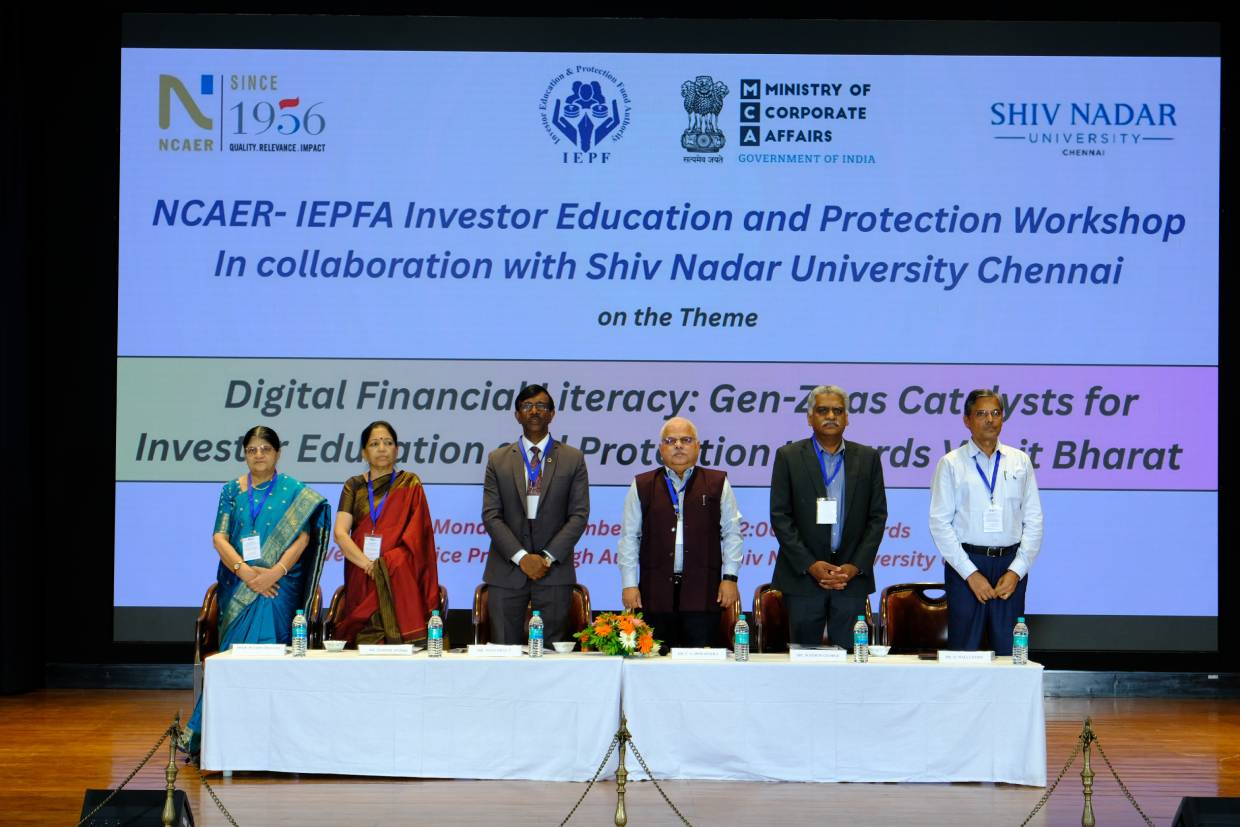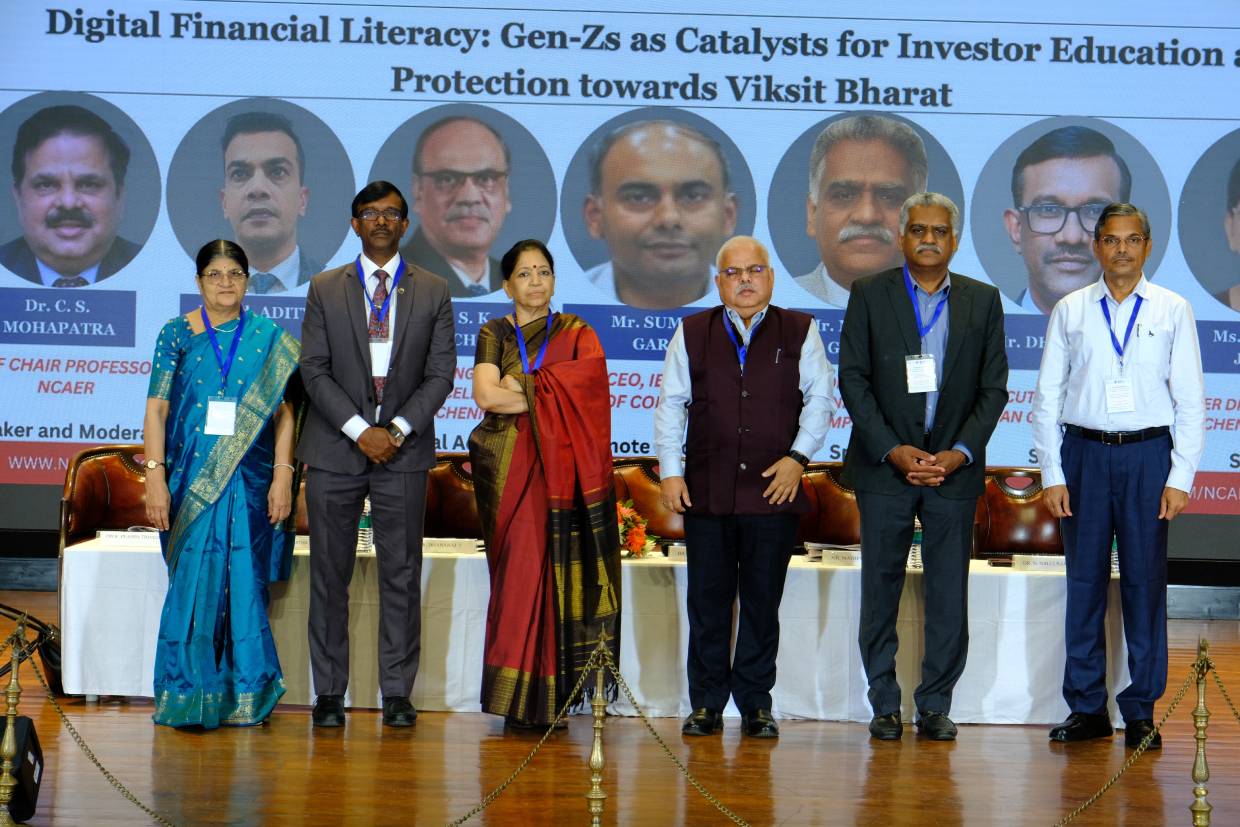
NCAER-IEPFA Investor Education and Protection Workshop in collaboration with Shiv Nadar University, Chennai on “Digital Financial Literacy: Gen-Zs as Catalysts for Investor Education and Protection towards Viksit Bharat”
Place: Chennai
28th September 2026, Justice Pratap Singh Auditorium, SNU, Chennai
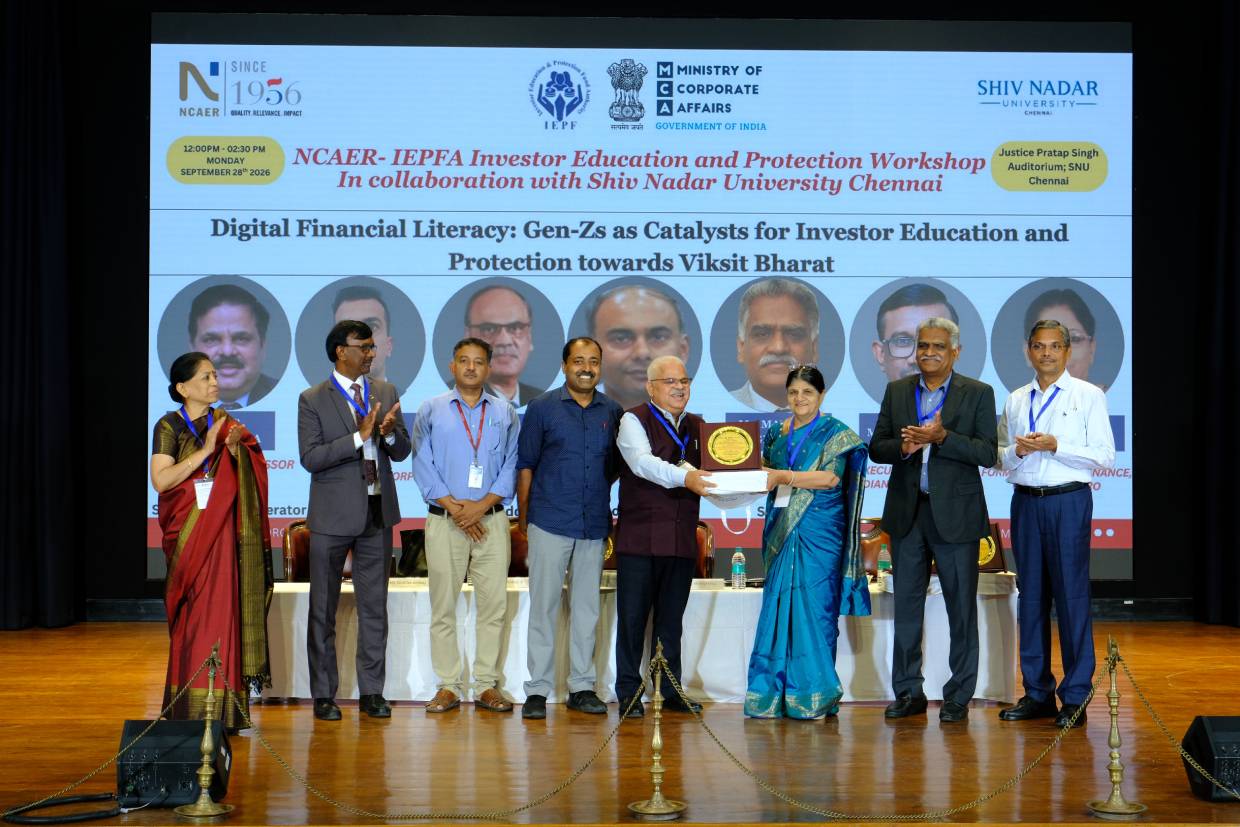
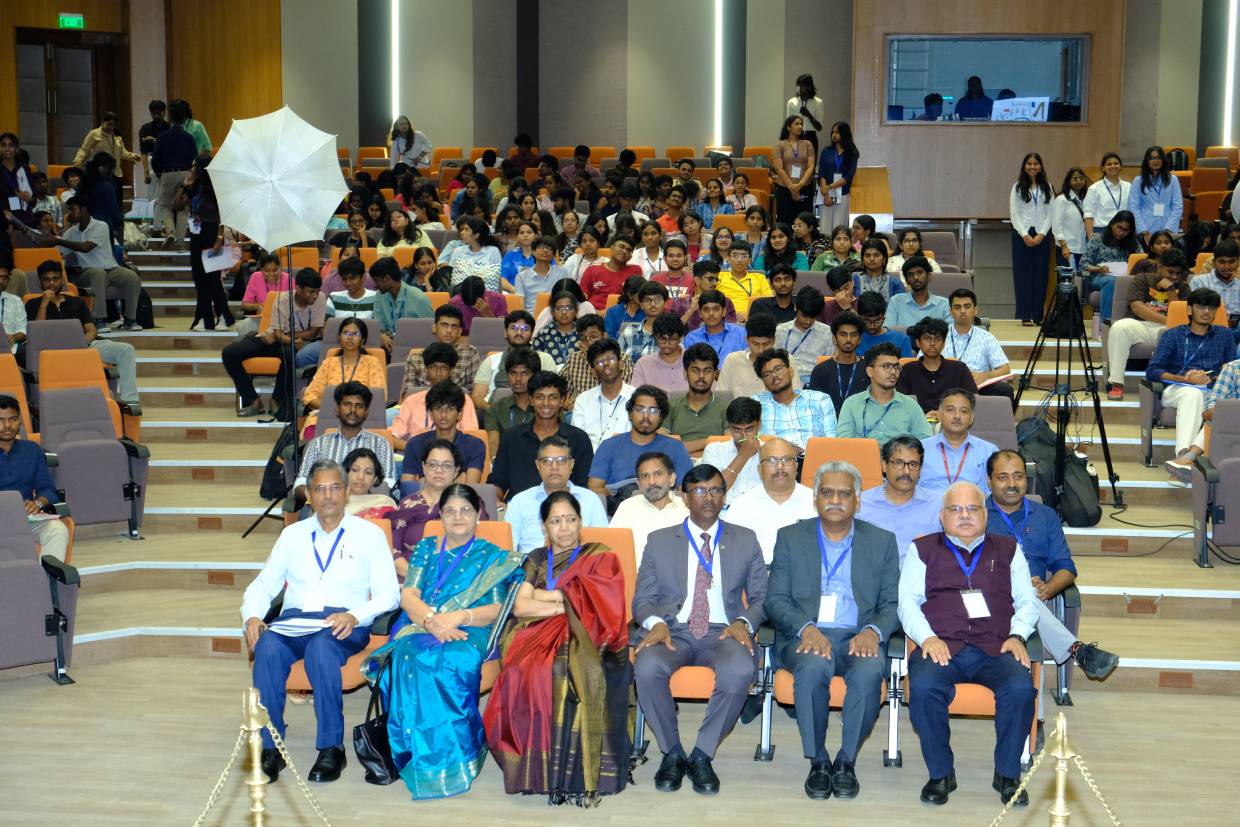
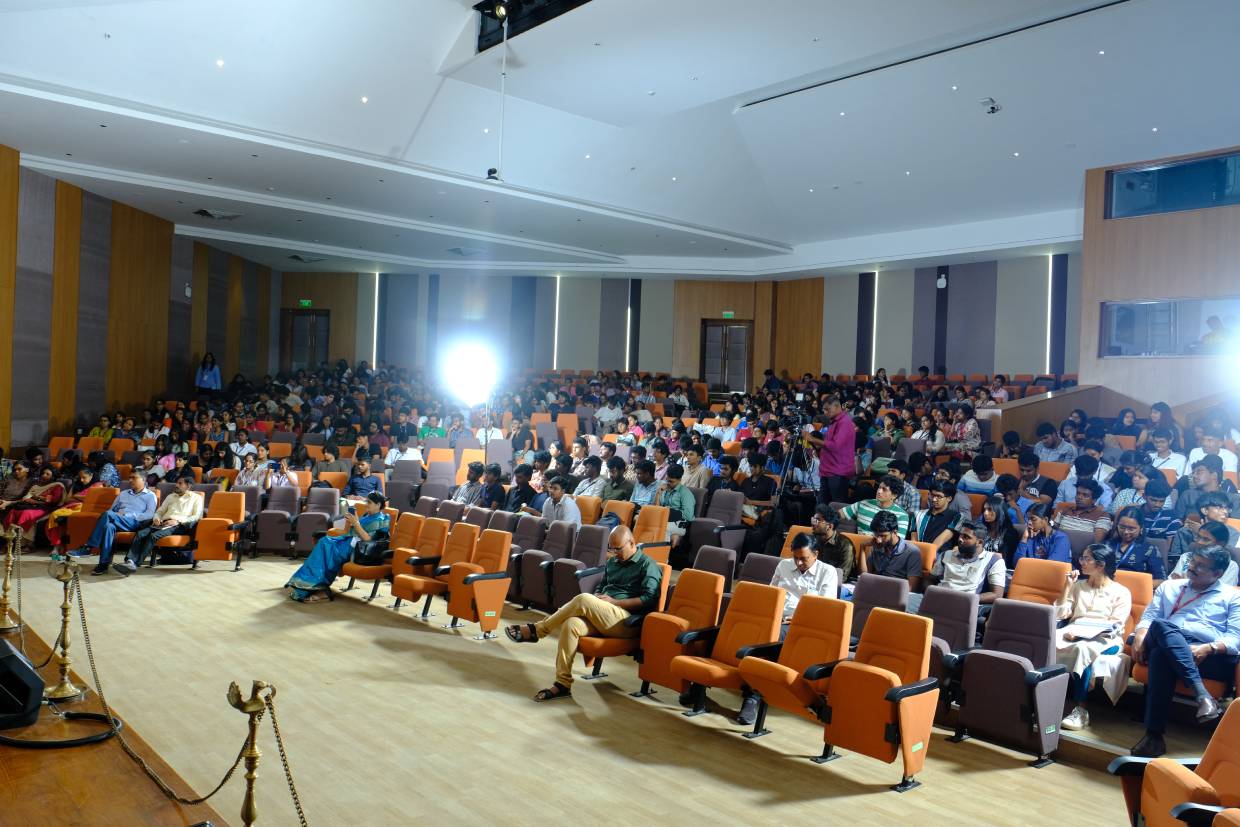
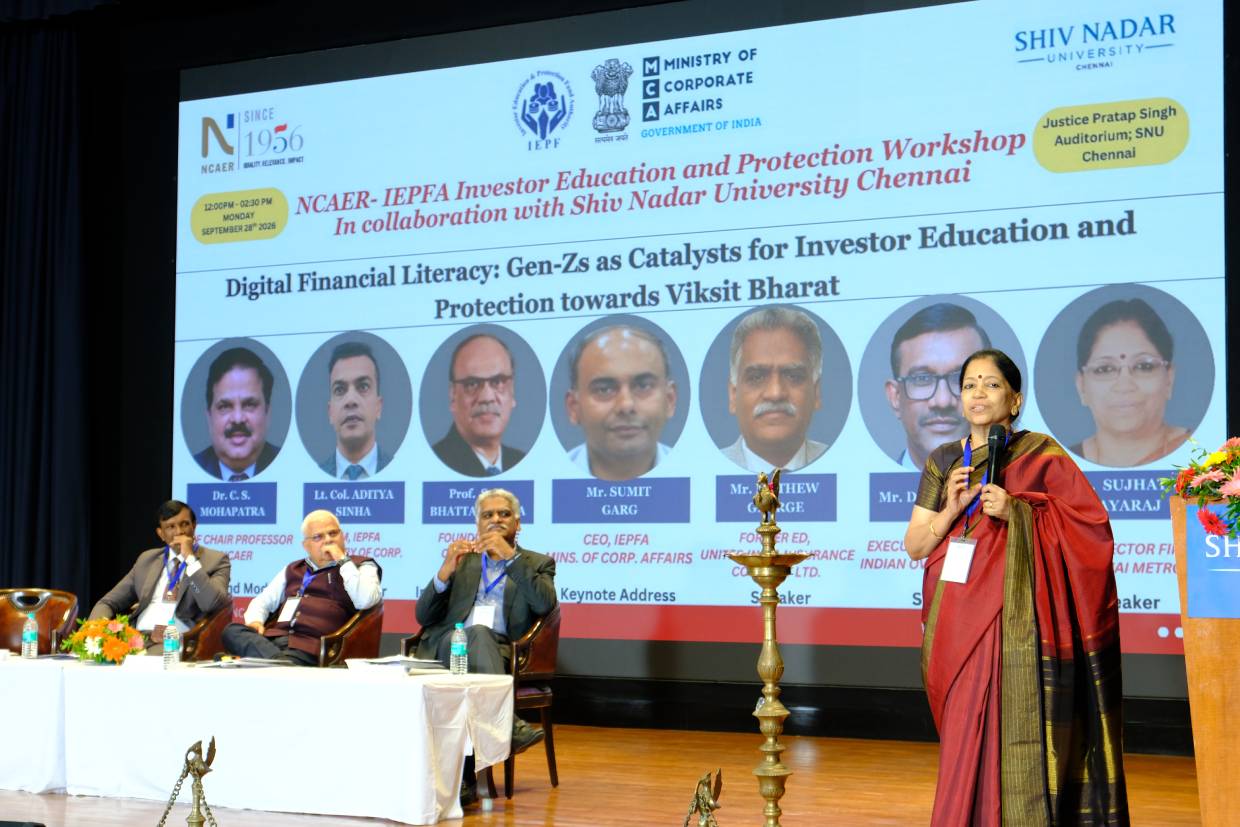
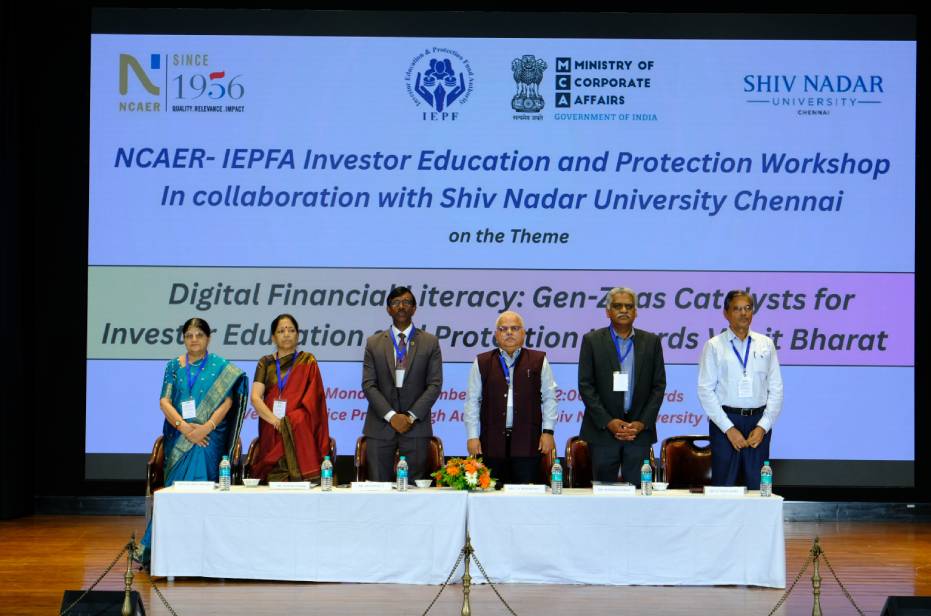
The National Council of Applied Economic Research (NCAER) and the Investor Education and Protection Fund Authority (IEPFA), Ministry of Corporate Affairs, Government of India, in collaboration with Shiv Nadar University, Chennai, organised the NCAER-IEPFA Investor Education and Protection Workshop on the theme “Digital Financial Literacy: Gen-Zs as Catalysts for Investor Education and Protection towards Viksit Bharat” on September 28, 2026, at the Justice Pratap Singh Auditorium, SNU, Chennai .
The workshop brought together senior policymakers, economists, financial sector experts, and academicians to deliberate to deliberate on the growing importance of digital financial literacy among Gen-Z and the catalystic role of young people in promoting responsible financial behaviour and investor awareness.
In her welcome address, Dr. Pushpa Trivedi, Senior Professor and Head, Department of Economics, Shiv Nadar University, Chennai, highlighted the importance of integrating digital financial literacy into higher education and emphasised the role of universities in equipping young people with practical knowledge and responsible financial habits so that they can navigate an increasingly technology-driven financial environment.
Delivering the inaugural address, Prof. S. K. Bhattacharyya, Founding Vice Chancellor, Shiv Nadar University, Chennai, underscored the importance of education, knowledge and innovation in preparing young citizens for the changing financial landscape and further highlighted the need to strengthen financial awareness among students and encourage them to become informed and responsible participants in the digital economy.
Mr. Sumit Garg, CEO, IEPFA, Ministry of Corporate Affairs, Government of India, in his keynote address highlighted the importance of strengthening investor education and protection in an increasingly digital financial ecosystem. He emphasised that the expansion of digital financial services needs to be accompanied by awareness of investor rights, safe digital practices, financial fraud risks, grievance redressal mechanisms and responsible financial decision-making.
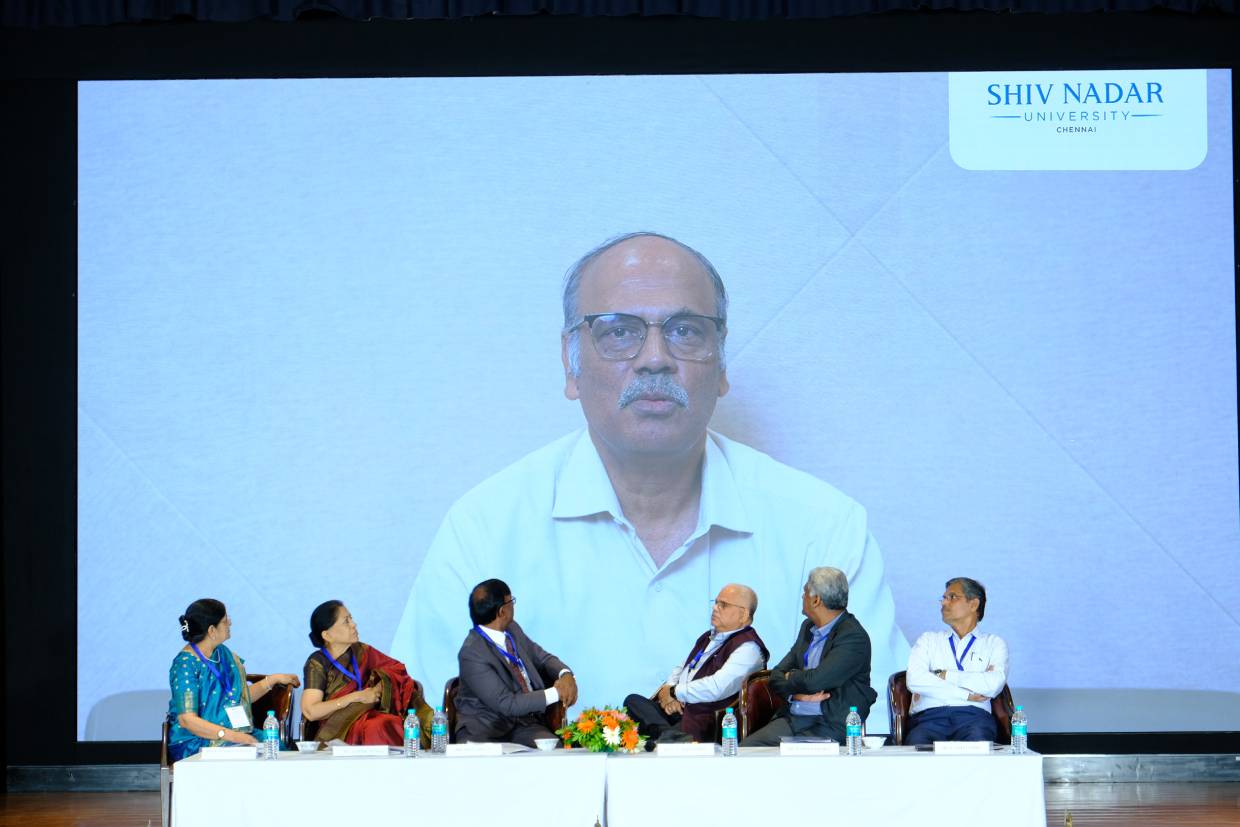
Moderating the panel discussion, Dr. C. S. Mohapatra, IEPF Chair Professor, NCAER, highlighted the transformation of India’s financial ecosystem through digitalisation and the increasing participation of young people in digital financial services and financial markets. He emphasised that digital financial literacy should go beyond awareness of digital products and services. Behavioural skills needed to make informed, rational and responsible financial decisions also need to be developed. He further highlighted the potential of Gen-Z as an important stakeholder in advancing investor education and protection and contributing to the broader objective of building financially resilient citizens towards Viksit Bharat. He pleaded for students becoming the member of financial literacy for the community. Lt. Col. Aditya Sinha, General Manager, IEPFA, Ministry of Corporate Affairs, Government of India, highlighted the importance of sustained digital financial awareness among young citizens. He focused on the risks associated with cyber fraud, phishing, impersonation and other forms of digital financial crime, and emphasised the need for citizens to adopt safe digital practices while using online financial services. Mr. Dhanaraj T., Executive Director, Indian Overseas Bank, highlighted the increasing role of digital banking in the everyday lives and the importance of understanding safe banking practices, responsible use of digital financial services and the need for customers, particularly young users, to remain alert to financial fraud and cyber risks. Mr. Mathew George, Former Executive Director, United India Insurance Company Ltd., underscored the importance of financial protection and risk awareness as integral components of financial literacy, emphasising the need for young citizens to understand the role of insurance and other financial protection mechanisms in managing financial risks. Ms. Sujatha Jayaraj, IRAS (Retd.), Former Director Finance, Chennai Metro, highlighted the importance of developing sound financial planning and responsible financial decision-making among young citizens. She emphasised the need for Gen-Z to understand financial risks, make informed choices and build sustainable financial habits for long-term financial well-being.
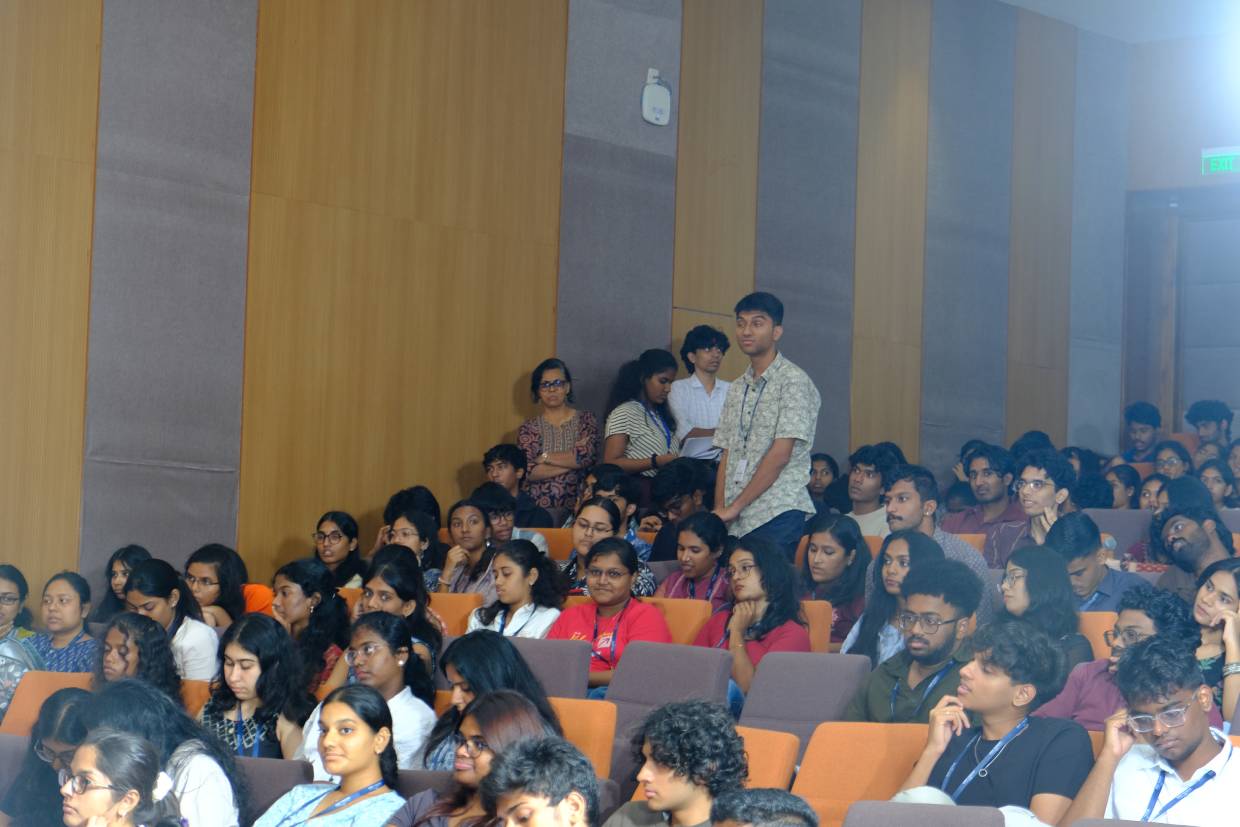
The panel discussion was followed by an interactive question-and-answer session, during which students and participants engaged with the speakers on issues relating to digital financial literacy, safe digital transactions, financial planning, investment awareness, cyber fraud prevention, insurance and investor protection.
The workshop concluded with the vote of thanks by Dr. N. Nallusamy, Registrar, Shiv Nadar University, Chennai, who expressed gratitude to the dignitaries, speakers, faculty members, students and organisers for their participation and contribution to the programme.
About The Organizations
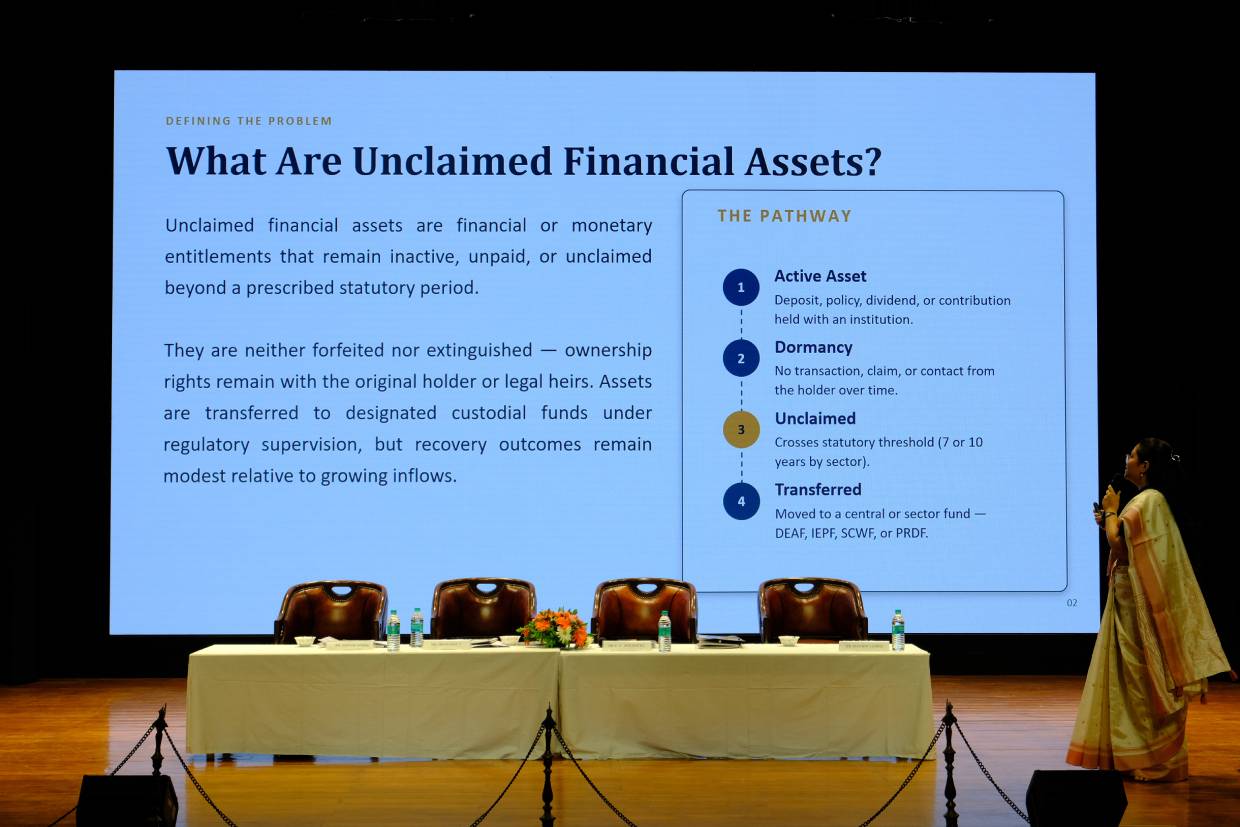
Investor Education and Protection Fund Authority: The Investor Education and Protection Fund Authority (IEPFA), set up on September 7, 2016, by the Government of India to administer the Investor Education and Protection Fund, is a landmark initiative of the Union Government. The Authority’s mandate is to ensure timely refund of shares, unclaimed dividends, and matured deposits/debentures, among other things, to investors; distribute disgorged amounts to the rightful applicants; promote awareness among investors; and ensure the protection of their interests. These objectives are part of the government’s efforts to make all citizens equal partners in the country’s financial development. Since its inception, the IEPFA has been fulfilling its mandate with dedication. It has held a number of Investor Awareness Programmes aimed at achieving inclusive financial literacy for stakeholders in rural, semi-urban, and urban areas besides enabling the rightful claimants to get their due unclaimed shares, dividends, and debentures speedily.
National Council of Applied Economic Research: The National Council of Applied Economic Research (NCAER), is India’s oldest and largest independent economic think tank, set up in 1956 to inform policy choices for both the public and private sectors. Over the past 70 years, NCAER has served the nation well with its rich offering of applied policy research, unique data sets, evaluations, and policy inputs to Central and State governments, corporate India, the media, and the citizenry. It is one of a few independent think tanks world-wide that combines rigorous economic analysis and policy outreach with deep data collection capabilities, particularly for large-scale household surveys. IEPFA has established an IEPF Chair on Regulation and a Programme of Economic & Regulatory Research at NCAER on Indian Investor Education, Awareness & Protection, with the objective of pursuing research that will help improve investor education and protection in India, and ultimately the investment climate. The activities of IEPF Chair Unit which is spearheading this workshop, include, inter-alia, measures to promote investor education and protection through organising workshops/seminars and pursuing research.
Shiv Nadar University Chennai: SNU, Chennai is established by “Shiv University Act 2018” by the Tamil Nadu Legislative Assembly to promote, conceptualize and bring about a paradigm shift through the development of outstanding leadership, research, knowledge and ideas for education and allied development sectors. Shiv Nadar University Chennai is part of the Shiv Nadar Foundation that has a legacy of excellence of over 30 years in education with over 40,000 alumni and students. The Department of Economics of Shiv Nadar University have a unique UG program, viz., B.Sc. Economics (Data Science), wherein we lay a great emphasis on the integration of Economic Theory and Finance with Emerging Quantitative tools of analysis. The university offers a stimulating learning environment, rich in academic resources, research opportunities, and extracurricular activities and fosters a culture of collaboration, diversity, and inclusion, where students can learn from each other and from the faculty of eminent scholars and practitioners.