
Fusion
Fusion
Broad Research Direction
Our work encompasses the design and synthesis of novel materials with precisely engineered electronic structures, aimed at eliciting distinctive photophysical and optoelectronic phenomena. These properties are systematically investigated across multiple platforms, including solution-phase configurations, thin-film geometries within active device structures, and individual nanocrystals. From physics and materials chemistry to devices, we are creating optoelectronic materials that power the future. In short, the research direction of our lab is “Developing optoelectronic materials: Engineering light at the material level.”
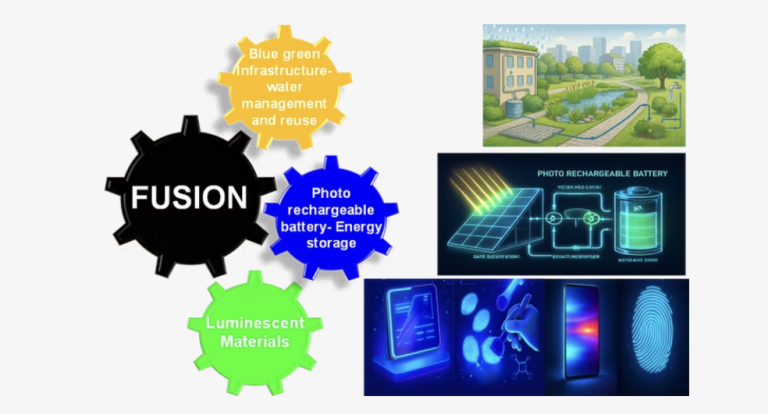
We combine spectroscopy, materials chemistry, and condensed matter physics to develop next‑generation optoelectronic materials. We design and create new materials, uncover their unique physical and optoelectronic behaviors, and build early‑stage devices that showcase their potential. Partnering with experts in advanced computation and cutting‑edge device engineering allows us to push beyond the limits of our own expertise. By uniting discovery, theory, and application in a single, continuous journey, we transform ideas born in the lab into innovations that can shape the technologies of tomorrow and illuminate the future. We can categorize our research in three directions:
Development of luminescent materials:
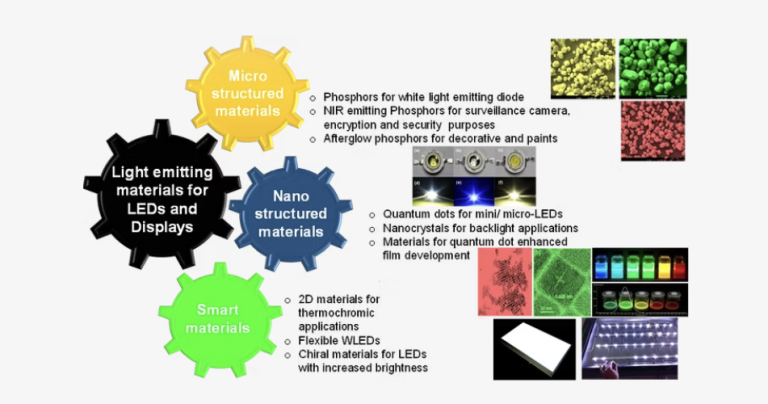
Our research in this area is focused on the design and development of micro- and nanostructured materials, as well as smart functional materials, tailored for advanced applications including high-resolution displays, sensitive pesticide detection, precise temperature monitoring in breast cancer therapy, and human-centric lighting systems.
Specifically, we engineer materials at the micro- and nanoscale such as quantum dots, nanowires, and nanocomposites with carefully controlled electronic and photophysical properties to achieve enhanced performance in micro-LED and mini-LED displays. These nanostructured materials provide superior luminance, color purity, and energy efficiency necessary for next-generation high-definition visual technologies.
For pesticide detection, we develop smart sensing materials incorporating nanomaterial-based sensors and molecularly imprinted polymers with high specificity and sensitivity. These materials enable real-time, low-detection-limit monitoring of harmful pesticide residues through electrochemical and optical transduction mechanisms, offering a compact platform compatible with smart farming technologies.
In the realm of biomedical applications, our work on temperature-responsive materials supports highly accurate monitoring of thermal changes at the cellular level during breast cancer therapy. Using nano-thermometry and thermosensitive probes integrated with photothermal treatment modalities, these materials facilitate precise control and visualization of temperature distributions critical for effective hyperthermia treatments.
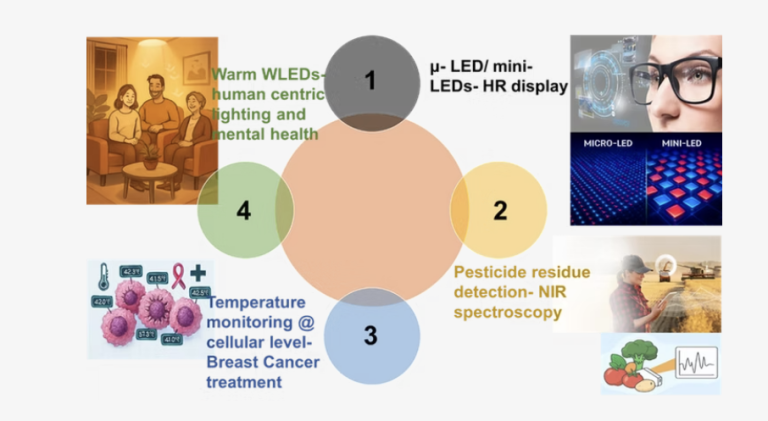
Lastly, our research in human-centric lighting focuses on advanced material systems that mimic natural circadian light cycles through tunable spectral outputs and dynamic control. These smart materials, combined with state-of-the-art LED technologies and integrated sensor networks, promote well-being by aligning artificial illumination with human biological rhythms, thereby enhancing mental health and productivity.
Through this multifaceted approach, combining micro/nanofabrication, advanced spectroscopy, device engineering, and collaborative computation, we are pushing the boundaries of functional optoelectronic and smart materials toward impactful technological innovations across display, environmental sensing, healthcare, and lighting sectors.
Development of Energy storage materials:
The rapid rise of the Internet of Things (IoT), wearable electronics, medical implants, and distributed sensors is driving a demand for compact, reliable, and long-lasting power sources. These technologies, increasingly embedded in everyday life and remote locations, require autonomous energy solutions that overcome the limitations of traditional microbatteries, which face challenges like frequent recharging, environmental concerns, and size constraints.
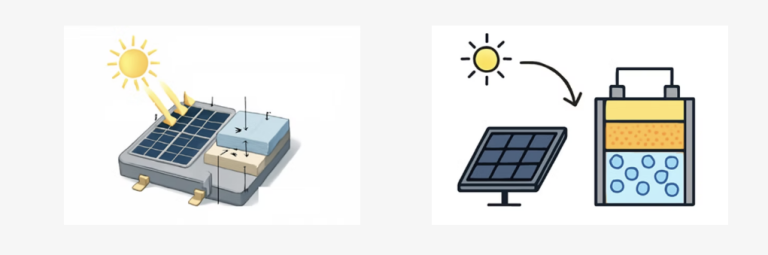
Our research focuses on developing advanced photo-rechargeable zinc-ion microbatteries (PR-ZIMBs) that integrate solar energy harvesting and storage into a single, efficient device. Zinc-ion technology offers a safe, eco-friendly, and cost-effective alternative well-suited for wearable and medical applications. By innovating in materials design, microfabrication, and device integration, we aim to create compact micro batteries with high solar conversion efficiency, robust energy storage, and long-term stability.
This project addresses the urgent need for maintenance-free, sustainable power sources to enable truly autonomous IoT and sensor networks, supporting technological self-reliance and environmental stewardship. Our vision is to advance indigenous solutions that empower the next generation of smart, sustainable microelectronics for India and beyond.
Development of blue green infrastructure:
Our research explores innovative Blue-Green Infrastructure (BGI) solutions to manage stormwater sustainably while promoting water reuse in urban environments. BGI integrates natural and engineered systems such as green roofs, permeable pavements, rain gardens, and urban wetlands to mimic and enhance natural hydrological processes including water retention, infiltration, filtration, and controlled release.By capturing and reusing stormwater locally, BGI reduces the burden on conventional drainage and sewer systems, mitigates urban flooding, and supports resilient, climate-adaptive cities. Our work focuses on designing and optimizing multifunctional BGI networks that not only control runoff but also provide critical ecosystem services like urban cooling, improved water quality, groundwater recharge, and irrigation support for urban greenery. We employ advanced modelling and experimental studies to understand the interactions between BGI components and urban hydrology, striving to achieve zero-runoff and closed-loop water balance systems. Collaboration with urban planners and environmental engineers enables us to translate scientific insights into practical, scalable solutions that promote sustainable water management, enhance biodiversity, and improve urban liveability.
Through this research, we aim to advance integrative strategies that transform urban landscapes into resilient, nature-based systems capable of addressing water challenges intensified by rapid urbanization and climate variability.